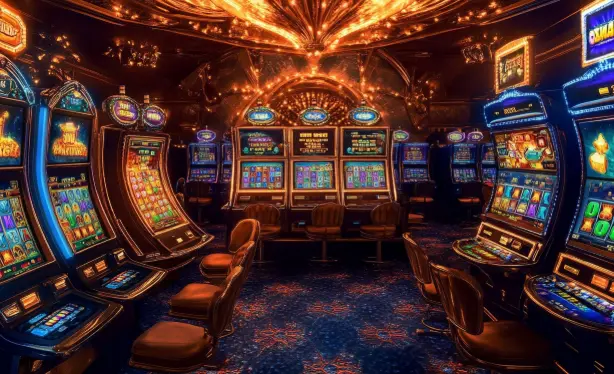
Norway Slot Room: How Do You Play Without License?
Running a slot room in Norway without a license is not a grey area you stumble into—it's a hard-coded regulatory trap, and the Norwegian Gambling and Foundation Authority (Lotteritilsynet) has spent the last decade turning the screws on unlicensed operators with surgical precision. The blunt truth: there is no legal "play without license" pathway for commercial slot machines on Norwegian soil. None. The 2022 Gambling Act amendments and the 2023 payment blocking regime made that crystal clear, and anyone telling you otherwise is either selling a fantasy or sitting on a server farm in Malta pretending the jurisdictional border doesn't exist. 🎰
The Legal Architecture Nobody Wants to Read
Norway operates a monopoly model. Norsk Tipping and Norsk Rikstoto hold the exclusive rights to offer gambling, and slot machines—the Norway slot room format specifically—can only legally exist under Norsk Tipping's umbrella through its Multix and Belago terminals, which are locked to physical locations and capped at strict loss limits. The Land-Based Gambling Act of 1995, as amended, governs these machines, and the authorization requirements are not negotiable. If you're an operator dreaming of a private slot room, the licensing gate is welded shut by design.
Offshore Operators and the Payment Blockade
Here's where the loophole hunters get aggressive. Unlicensed offshore operators do target Norwegian players, and the unlicensed slot room model survives through remote servers and crypto rails. But Lotteritilsynet's DNS and payment blocking framework, enforced since 2019 and expanded through 2023, routes around that fantasy fast. Banks and payment processors are legally required to block transactions to unauthorized operators, and the authority can force internet service providers to block domains. So the operational reality for any would-be unlicensed slot room is this: you're fighting a state that has already weaponized the financial and network layer against you. 💸

Technical Mechanics of the Workaround—and Why They Crack
The technical playbook for evading the license requirement usually involves three vectors: offshore licensing by a foreign regulator, server hosting outside Norwegian jurisdiction, and payment processing through crypto or third-party merchant accounts. Each vector has a fracture point. The Norway slot room operator relying on offshore licensing still faces marketing restrictions—Norwegian law bans advertising for unlicensed gambling, and the authority actively pursues affiliates and media partners who promote them. Server hosting abroad doesn't shield you from enforcement action against Norwegian-facing payment flows. And crypto rails, while harder to block, create their own compliance nightmare for players and operators alike, with anti-money-laundering scrutiny escalating across the EU and EEA.
The Multix Terminal Reality Check
The only sanctioned slot room experience in Norway runs through Norsk Tipping's physical terminals, and the technical constraints there are brutal by design. Loss limits are hard-coded at the player account level—NOK 20,000 per month and NOK 60,000 per year as of the tightened 2023 rules, with mandatory cooling-off periods. Machines must be located in licensed premises, and the terminal software enforces session limits that no operator can override. This is the licensed slot room model in its purest form: state-controlled, algorithmically capped, and fundamentally resistant to the kind of high-volume play that commercial operators chase.

What the Enforcement Data Actually Shows
Lotteritilsynet's annual enforcement reports tell a story that should end every debate about playing without a license. Domain blocking requests have numbered in the hundreds per year, and the payment blocking regime has cut off transaction flows to dozens of operators. The authority's 2023 annual report documented over 200 DNS blocking actions and coordinated payment blocks across major Norwegian banks. Any slot room operation attempting to serve Norwegian players without authorization is operating in a shrinking corridor with an expiration date stamped on the wall. The technical infrastructure to enforce the monopoly is already deployed, already funded, and already biting. 🚫
Player Session Behavior and the Enforcement Gap Illusion
Players who claim they can access unlicensed slot rooms freely are describing a temporary state, not a stable equilibrium. The enforcement gap between a domain being registered and being blocked is measured in weeks or months, not years, and payment friction hits long before the domain disappears. The illusion of frictionless unlicensed play collapses the moment you try to withdraw—that's where the operational reality of the Norway slot room prohibition becomes concrete, and where the authority's payment blocking infrastructure does its most effective work.
The Only Defensible Technical Position
From an audit and infrastructure standpoint, the defensible position for anyone studying or operating in this space is unambiguous: the licensed terminal model under Norsk Tipping is the sole legally operable slot room format in Norway, and every alternative is a temporary, enforcement-exposed configuration. The payment blocking layer, the DNS blocking capability, and the advertising prohibition combine into a three-point enforcement triangle that no unlicensed operator has sustainably broken. The technical cost of operating outside that triangle—legal exposure, payment processor loss, domain churn, and affiliate network collapse—exceeds any theoretical margin advantage. The license gate isn't a hurdle to route around; it's the load-bearing wall of the entire Norwegian gambling structure, and the state has reinforced it at every layer of the stack.